Big-dog life · 8 min read
Big dog road trip packing list: what to bring for an overnight drive.
Pack the road trip in layers: what the dog needs during the drive, at stops, overnight, and in the paperwork folder—without turning the car into a pet-store aisle.
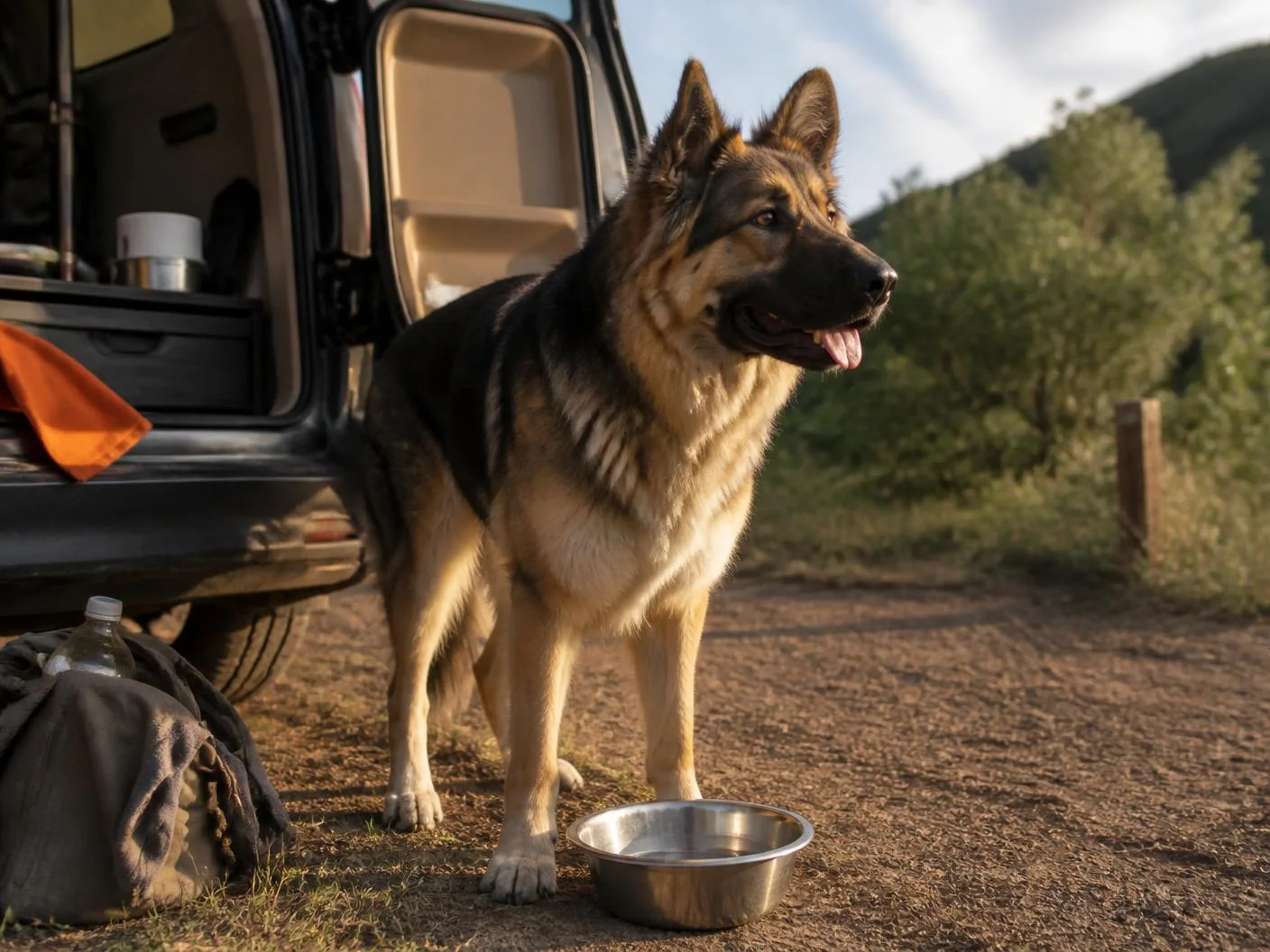
For an overnight road trip with a big dog, pack by when you will need something—not by how impressive the gear pile looks. Keep the drive essentials reachable, put the overnight routine together, separate documents from supplies, and leave enough vehicle space for the dog and the travel setup you already planned.
That last part matters more with a large dog. A towel is a towel until it is the size of a beach blanket, the bed occupies half the cargo floor, and the “small bag of dog stuff” develops its own gravitational field.
This is a practical packing guide, not a veterinary plan or crash-safety certification. For vehicle fit and installation questions, start with our big dog, small back seat guide and the instructions for the exact restraint, carrier, crate, vehicle, or other equipment you use.
Start with four trip facts before you pack
Write down four things:
1. How long you will be away: day trip, overnight, or multiple days. 2. What the dog will actually do: mostly vehicle time, a family visit, hotel stay, trail, event, or a mix. 3. The weather and surfaces you expect: hot, cold, rainy, muddy, pavement, trail, beach, or indoor-only. 4. Where you are crossing: staying in-state, crossing state lines, or leaving the country.
Those four answers decide more of the packing list than the breed name does.
For U.S. interstate travel, requirements are not one-size-fits-all. The USDA Animal and Plant Health Inspection Service says destination states and territories may require items such as health certificates, vaccinations, diagnostic testing, or treatments, and directs owners to check the receiving state’s current requirements. Do that before the night you are loading the car. USDA APHIS: interstate pet travel requirements.
Build one “reach it without unloading the car” bag
The first bag should contain the things you may need at a normal stop or minor mess.
For most trips, that means:
- water and the bowl your dog will actually use;
- waste bags;
- the leash, harness, or collar used in the normal routine;
- current identification and contact information;
- one towel that is actually large enough for your dog;
- ordinary cleanup supplies you already use;
- a small familiar item such as a toy or settle mat if it helps the dog follow the normal routine;
- any records you need to access quickly.
Do not bury this bag under luggage.
The ASPCA’s current road-trip guidance recommends preparing pets with shorter drives before a long trip, packing familiar bedding or a toy, carrying water, and traveling with relevant records. Its broader travel guidance also recommends a travel kit with food, bowls, leash, waste bags, grooming supplies, medications, first-aid supplies, and travel documents. ASPCA: traveling with pets and ASPCA travel safety tips.
Pack the overnight routine separately
The second layer is what you need after the driving part ends.
Keep together:
- the dog’s normal food for the planned stay;
- food and water bowls;
- familiar bedding, settle mat, or blanket if you use one;
- normal grooming or cleanup items appropriate to the trip;
- established medication or special-feeding supplies, if applicable;
- whatever you normally need for the first walk and the first morning.
The point is not to change the routine. It is to make the ordinary routine easier to reproduce somewhere else.
Do not use a generic internet checklist to change medication, feeding amounts, supplements, or treatment. If the trip changes a medical need, that belongs with the dog’s veterinarian.
Big dogs make “small extras” physically bigger
A big-dog packing list has the same categories as many other dog lists. The difference is often volume.
A large dog’s:
- bowl may not fit in a cup holder or tiny day bag;
- bed or mat may consume meaningful cargo space;
- towel may need to cover a lot more wet dog;
- normal food container may be physically bulky;
- crate, restraint, or travel setup can determine where every other bag goes.
That is why packing should happen after the dog’s occupied vehicle space is defined, not before.
Measure and set up the dog’s travel area first. Then assign the remaining cargo space to human luggage and dog supplies. If a bag has to intrude into the dog’s intended space, the packing plan is not finished.
Keep travel documents in one boring, obvious place
For an ordinary domestic trip, your exact document needs depend on the destination and circumstances.
Useful records to keep together can include:
- current identification information;
- a recent photo of the dog;
- vaccination or rabies records when relevant;
- medical history or medication information you may need in an emergency;
- veterinarian contact information;
- destination-specific paperwork required for the trip.
The AKC’s current road-trip safety guide recommends carrying medical records, and its broader travel guide advises taking vaccination records and checking health requirements for extended trips. AKC: road-trip safety and AKC: complete guide to traveling with your dog.
If you are crossing a state line, use the current official destination-state information linked by USDA rather than relying on an old screenshot, saved social post, or last year’s trip. Requirements can change.
Make the weather change the list—not the amount of clutter
Add only what the conditions justify.
Hot weather
Plan for accessible water, shade at the destination, and a cool resting option appropriate to your normal routine. Never make “the dog can wait in the parked car” part of the itinerary. The ASPCA warns that parked vehicles can become dangerous quickly even when the weather does not feel extreme. ASPCA travel guidance.
Rain
Add a second towel or another practical way to isolate wet gear from the rest of the luggage.
Cold
Bring the dry bedding or layer your dog already uses when conditions call for it. This checklist does not decide temperature thresholds or prescribe clothing for a particular dog.
Trail, beach, or messy destination
Add the cleanup supplies and surface-specific items you already know you will use. Do not turn every possible outdoor hazard into a purchase requirement.
Do a hotel or guest-room scan before the dog unloads
A new room is not automatically dog-ready.
Before the dog gets full access, do a fast scan at roughly dog height:
- dropped pills or food near furniture;
- open trash;
- accessible cleaners;
- dangling cords;
- small objects on the floor;
- doors, balconies, gates, or exits that need a plan;
- anything the host or hotel has placed within easy reach of a tall dog.
The ASPCA recommends checking a hotel or new space before letting a pet explore, including looking for dropped medications and other hazards. That is the travel version of the same “nose-height audit” in our big-dog home setup guide.
A reusable overnight road-trip checklist
Drive bag
- [ ] Water
- [ ] Familiar bowl
- [ ] Waste bags
- [ ] Normal leash / harness / collar setup
- [ ] Current ID and contact information
- [ ] Large towel
- [ ] Routine cleanup supplies
- [ ] Familiar toy or settle item, if useful
- [ ] Records you may need quickly
Overnight bag
- [ ] Normal food for the planned stay
- [ ] Food and water bowls
- [ ] Bedding / mat / blanket used in the normal routine
- [ ] Established medication or special-feeding supplies, if applicable
- [ ] Grooming or cleanup items appropriate to the trip
- [ ] First-morning walk supplies
Paperwork
- [ ] Recent dog photo
- [ ] Vaccination / rabies documentation when relevant
- [ ] Veterinarian contact information
- [ ] Medical or medication record needed for an emergency
- [ ] Destination-state or international travel requirements checked from current official sources
Conditions
- [ ] Weather-specific supplies added
- [ ] Destination allows the dog and any size/breed restrictions are confirmed
- [ ] Dog’s vehicle space is not being used as overflow luggage
- [ ] New-room arrival scan planned
Load the car in the order you will need things
A simple loading rule:
Dog space first → overnight bag second → human luggage third → drive bag last.
The drive bag should be one of the easiest things to reach. If you have to unload two suitcases, a cooler, and a folding chair to reach the waste bags at a rest stop, the packing order has failed its first field test.
For the dog’s travel hardware itself, use the exact manufacturer’s instructions. If independent crash-test or certification information matters to your decision, the Center for Pet Safety certified-product directory publishes product-specific listings rather than treating every harness, carrier, or crate as equivalent.
The five-minute final check
Before leaving, ask:
1. Can I reach water, leash, waste bags, ID, and a towel without unloading the car? 2. Does the dog still have the full travel space we planned? 3. Do I have the normal overnight routine without changing food, medication, or care instructions? 4. Have I checked the current destination rules if we are crossing a border or state line? 5. Is there anything in the dog’s space that can move, spill, or become a problem during the trip?
If those five answers are good, stop adding gear.
Big-dog travel gets expensive and complicated quickly when every uncertainty becomes another product. A repeatable packing system is usually more useful than another “must-have” list.
Sources and further reading
Sources checked September 22, 2026. Travel, state-entry, product, and certification requirements can change; verify current official requirements and the exact manufacturer instructions before the trip.
- USDA APHIS: Take a Pet From One U.S. State or Territory to Another — current federal portal explaining that receiving states and territories set domestic pet-entry requirements and linking to destination rules.
- ASPCA: Traveling With Pets? Follow These Expert Dos and Don’ts to Keep Them Safe — December 30, 2025 road-trip preparation and travel-safety guidance.
- ASPCA: Travel Safety Tips — travel-kit, vehicle, and preparation guidance.
- American Kennel Club: Essential Road-Trip Safety Tips for Traveling With Your Dog — water, spare leash/collar, records, and trip-preparation guidance.
- American Kennel Club: The Complete Guide to Traveling With Your Dog — planning, food, water, waste bags, and lodging considerations.
- Center for Pet Safety: CPS Certified Products — current product-specific certification listings for applicable travel products.
Editorial note: This is a researched packing and trip-organization guide. It is not veterinary advice, a crash-safety certification, or a hands-on product test. Big Paws Club has not tested the products referenced by the external sources.
Hero image: AI-generated lifestyle illustration, not a real customer dog, vehicle test, or product demonstration.
Want more practical big-dog checklists? Join The Big Dog Brief from the signup on Big Paws Club.