Practical guide · 7 min read
Making room for a big dog: a practical home setup checklist.
Plan the bed footprint, clear the traffic lanes, secure the tempting stuff, and put cleanup supplies where the mess actually happens.
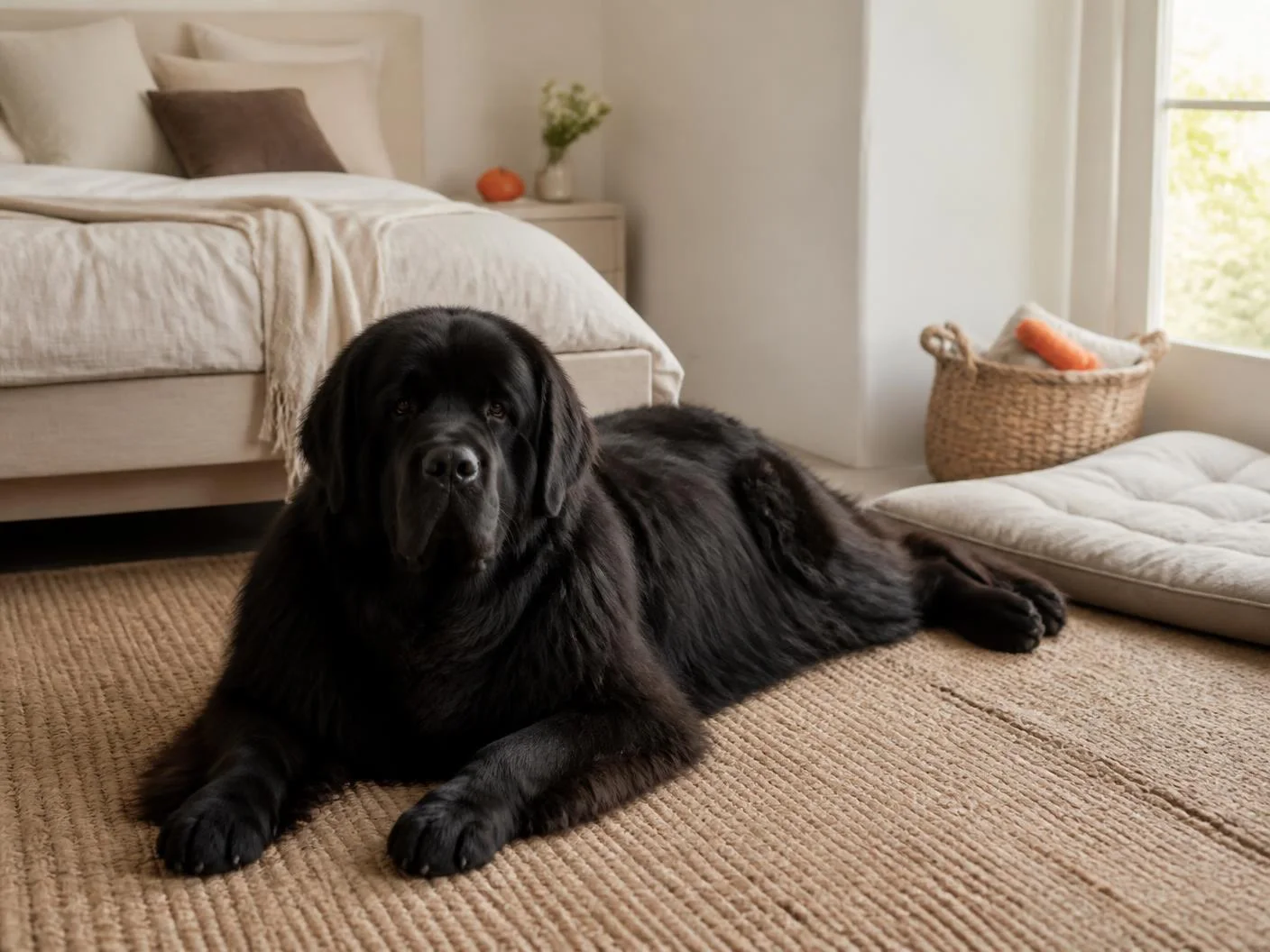
You do not need a giant house to make room for a big dog. You need a layout that works at full dog size: a real sleeping footprint, clear everyday paths, secure storage for things that should stay out of reach, and cleanup supplies close to the mess.
A large dog can turn a perfectly normal room into a geometry problem. The fix is not buying more stuff. Start by mapping footprint, flow, and mess with the home you already have.
Measure the sleeping footprint
Start with the place your dog will actually occupy, not the label on a bed.
If you already have a bed or mat, record both its outside footprint and the usable sleeping area. If you are still shopping, measure the space your dog uses while resting and compare that with the product's published usable dimensions. Our measuring guide walks through that process in detail.
Then test the bed footprint in the room before you commit to it. Painter's tape works. A folded blanket works. The goal is simply to see the real rectangle on the floor.
Check four things:
- Can people walk past it without stepping over the dog?
- Does it interfere with a door, cabinet, closet, or drawer that needs to open?
- Is there enough room for the dog to get on and off without squeezing through furniture?
- If the dog stretches past the bed, does that put their head, paws, or tail directly into the household traffic lane?
A big bed in the wrong corner can make the whole room feel small. A measured footprint in the right corner can disappear into the layout surprisingly well.
Clear the everyday paths
Walk the route your dog will use most often: sleeping area to water, water to the door, door to outside, and back again.
You are looking for the boring little collision points that become annoying when the dog is large: a narrow turn around a coffee table, a trailing cord, a lightweight stand that gets bumped, a basket in the doorway, or a bed placed where everyone has to step around it.
This is also a good time to remove actual household hazards. The American Kennel Club's puppy-proofing guidance recommends securing electrical cords, medications, cleaning supplies, trash, small swallowable objects, sharp items, and doors or windows a dog could get through. Those recommendations are useful well beyond puppyhood when a curious dog can reach more of the house than expected.
For a large dog, think beyond floor level. A counter edge, low shelf, side table, or open lower cabinet may be well within nose range.
A quick traffic-flow test
Stand at the dog's sleeping spot and follow the normal route to the exit. If you have to sidestep furniture, squeeze between objects, or step across a cord, fix that path before adding more dog gear.
The goal is not an empty house. It is a house where normal movement does not require a daily obstacle course.
Put supplies where the mess happens
The entryway is one of the highest-value places to organize because wet paws, loose hair, mud, leashes, bags, and towels all tend to arrive at the same door.
A simple cleanup station can be nothing more than:
- one washable mat or runner at the main dog entrance;
- two or three towels within reach;
- waste bags and walking gear in one predictable place;
- a hook or bin for a wet leash or harness;
- a small basket for the grooming or cleanup items you actually use.
Keep household cleaners in their normal secure storage, not in an open dog basket. The ASPCA's household-product guidance advises using cleaning products according to their labels and keeping potentially harmful household products away from pets. The practical takeaway for a dog station is simple: towels and dog gear can stay handy; chemicals still belong secured.
Room-by-room home setup checklist
Entryway
- Clear the door swing and the dog's path in and out.
- Put towels, bags, and leash gear where you can reach them quickly.
- Keep exterior doors and gates secure before unloading or bringing a new dog inside.
Living room
- Mark the actual bed or mat footprint.
- Move cords and fragile low objects out of the main dog path.
- Give water and resting areas enough room that people are not constantly stepping around them.
Kitchen
- Secure trash and food the dog can access.
- Keep medications and cleaning products inaccessible.
- Check lower cabinets if your dog is tall, persistent, or skilled at opening things. AKC specifically recommends securing cabinets that contain household chemicals in its home-safety guidance.
Bedroom
- Check whether the resting spot blocks the doorway or the route people use at night.
- Move chargers and loose cords away from the sleeping area.
- Make sure shoes, small objects, and laundry items are not automatically becoming dog toys.
Garage, utility room, or storage area
- Put tools, chemicals, pesticides, batteries, and sharp objects behind a secure barrier or closed storage.
- Keep the dog out of active repair or tool work areas rather than trying to manage the hazard item by item.
Yard or patio
- Walk the perimeter and check gates before relying on the space.
- Remove obvious chewable debris, sharp materials, or access to household chemicals and garden products.
- Recheck the route between the door and the outdoor area so carrying gear, groceries, or trash does not create an accidental escape point.
Secure what a tall dog can reach
"Up high" is not a universal storage strategy when the dog is large.
The safer question is: Can the dog actually get to it? That may mean a closed cabinet, a latched bin, a pantry door, a secure trash can, or a room the dog does not access unsupervised.
AKC's household-hazard guidance highlights garbage, medications, tools, electric cords, pesticides, and other common items as things dogs should not be able to access. For a big dog, do not assume a kitchen counter or bathroom vanity is automatically out of range.
This does not require turning the house into a fortress. Secure the high-consequence stuff first, then organize around the dog's actual habits instead of every imaginable scenario.
Do a ten-minute nose-height audit
Before a new dog arrives—or anytime the dog suddenly seems to have discovered a new level of the house—do one slow pass from roughly dog height.
You are not measuring the dog here. You are changing your point of view.
Look for:
- dangling cords or blind cords;
- food, gum, medications, supplements, or cleaners near an edge;
- open trash or recycling;
- children's toys, rubber bands, batteries, or small objects on the floor;
- sharp tools or project materials;
- unstable decorative items at tail or shoulder level;
- an exterior door that opens directly into a busy area without a plan for managing the dog.
The value of this audit is not the list itself. It is noticing what is easy to miss from adult standing height.
If you only fix three things before the dog comes home
Do these first:
1. Choose the sleeping footprint. Put the bed or mat where the dog can rest without blocking normal movement. 2. Secure the high-consequence access points. Trash, medications, household chemicals, cords, and tempting small objects should not be freely available. 3. Set up the main entry. Clear the path, secure the door or gate, and keep towels and walking gear close enough to use without searching the house.
Everything else can be refined after you see how the dog actually uses the space.
Keep one home-and-shopping record
Save the measurements you are likely to need again:
- doorway width where bulky gear has to pass;
- available floor space for a bed or crate;
- the dog's current sleeping footprint;
- bed outside dimensions and usable sleeping dimensions;
- storage-bin or shelf dimensions for bulky dog gear;
- the exact product link and return terms for anything you may need to exchange.
You do not need a spreadsheet unless you enjoy spreadsheets. One phone note is enough.
The advantage is simple: the next time you shop for a bed, crate, mat, gate, or storage solution, you are comparing the product with a real space instead of remembering that the old one was "pretty big."
Your next useful move
Pick the room your dog will use most and do a five-minute footprint-and-flow check today. Mark the bed area, walk the path to the door, and move the first three things that make the route awkward.
Then use the Big Paws measuring guide before buying anything whose fit depends on dimensions.
Sources and further reading
Sources checked September 16, 2026. These links support the household-safety portions of this practical planning guide; the room-layout framework is Big Paws Club editorial guidance.
- American Kennel Club: Puppy-Proofing Tips for Your Home and Yard — securing cords, medications, cleaning supplies, trash, small objects, doors, windows, and outdoor hazards.
- American Kennel Club: Household Hazards for Dogs — garbage, medications, tools, electrical cords, pesticides, and other household access risks.
- ASPCA Animal Poison Control: Poisonous Household Products — household-product handling and general poison-control guidance.
Editorial note: This is a practical home-organization guide, not a veterinary, behavior, construction, or product-safety certification. It does not claim that any specific bed, gate, cleaner, or other product has been tested by Big Paws Club.
Image: AI-generated lifestyle illustration, not a real customer dog or product test.