Research-based guide · 7 min read
Big dog, small back seat: measure the car before the gear.
Measure the opening, usable floor space, and real travel setup before buying another crate, barrier, cover, or road-trip accessory.
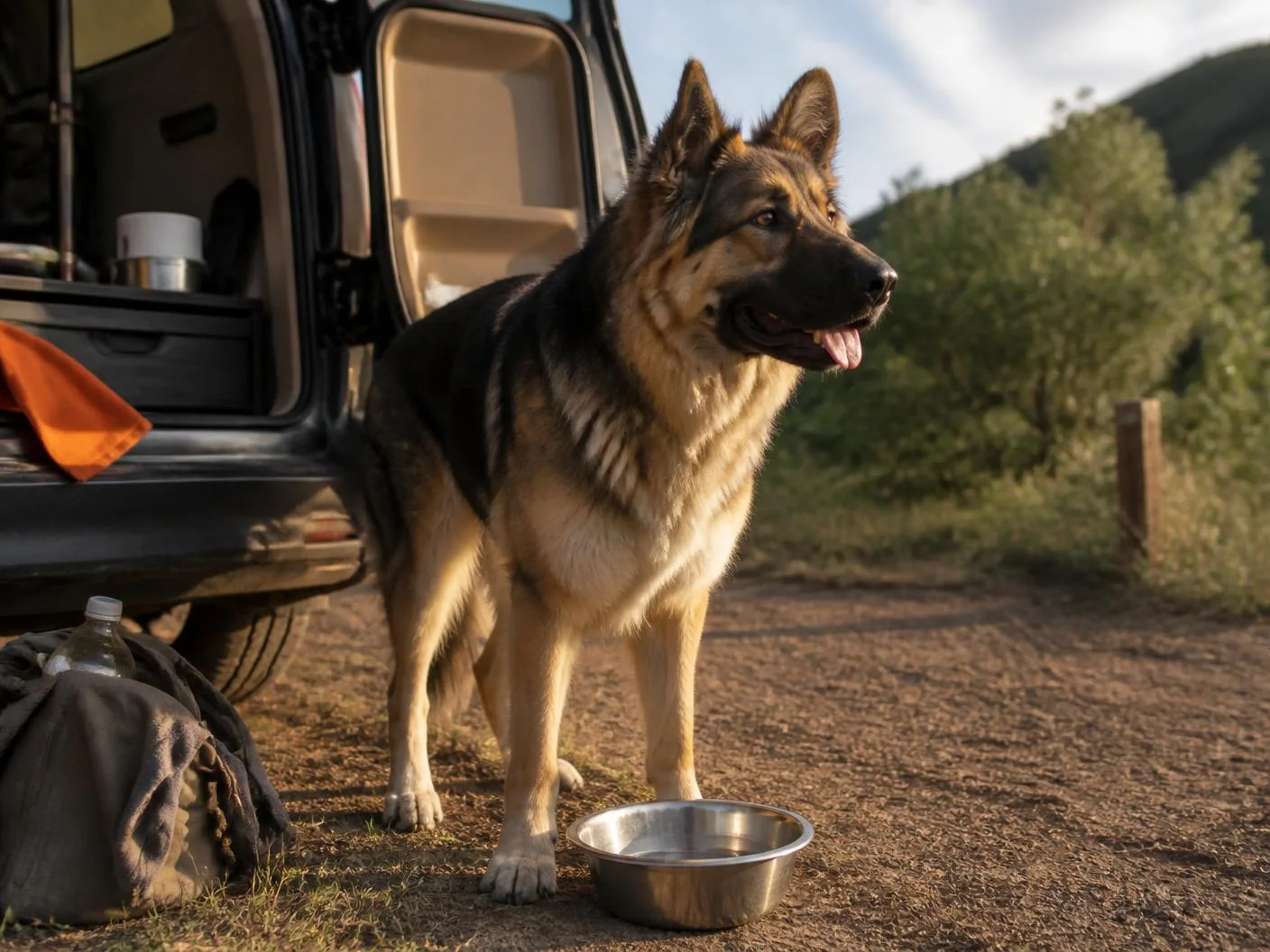
For a big dog in a small car, start with the vehicle—not the product page. Measure the opening the dog and gear must pass through, the usable floor area with the seats in their real travel position, and anything that steals space once the doors close. Then compare those numbers with the exact product maker’s installation instructions and claims.
A cargo area can look enormous in a photo and become suspiciously compact once a large dog, a crate, a cooler, two towels, and one optimistic human all try to use it at once.
Measure the opening and the usable interior
The widest published cargo number is not the whole story. Before shopping, record the dimensions that control what can actually enter and sit in the vehicle.
Measure the opening
With the vehicle parked, measure the narrowest usable width and height of the door or hatch opening. Note anything that reduces the opening: trim, wheel wells, sloped glass, a raised sill, folded-seat hardware, or the angle of the hatch.
If you are considering a crate or other rigid item, the opening matters before the interior footprint does. A box that fits the cargo floor on paper is not useful if it cannot pass through the hatch in the orientation required by the manufacturer.
Measure the floor the way you actually travel
Set the seats in the position they will use on the real trip, then record:
- usable floor width at the narrowest point;
- usable floor length;
- usable height where the dog or equipment will actually sit;
- the door or hatch opening width and height;
- any fixed hardware, wheel-well intrusion, slope, or seatback angle that removes usable space.
Do not treat every inch of advertised cargo volume as dog space. The practical question is: what rectangle and height are genuinely available after the people, seats, and ordinary trip gear are in place?
Keep the numbers in the same note you use for your dog and home measurements. Our measurement guide explains why the exact number beats a size word.
Separate “it fits” from “it protects”
Physical fit and safety claims are different questions.
A seat cover can protect upholstery. A barrier can manage where a dog moves. A hammock-style cover can create a cleaner seating area. None of those descriptions, by itself, establishes crash protection.
For a restraint, carrier, or travel crate, read the exact manufacturer’s installation instructions and compatibility requirements. If independent crash-test or certification information matters to your decision, look for the exact product and size, not just a brand name or a similar-looking model.
The Center for Pet Safety’s current certified-product listings separate certified harnesses, travel carriers, and travel crates and publish product-specific test information. That is useful precisely because certification applies to listed products and sizes—not to every item in the same category.
Big Paws Club does not infer crash protection from marketing language, a product category, or a physical fit check.
Do a parked-car dry run before the real trip
Set up the car while it is parked and you are not late.
Check that:
- doors and the hatch close normally;
- the dog can enter without being forced through an awkward opening;
- the dog has the intended occupied area once the setup is installed;
- the planned product can be installed exactly as its maker requires;
- vents, controls, door latches, and normal passenger movement are not blocked;
- the items you plan to carry still have somewhere to go.
Do not “solve” an incompatible setup by improvising a new anchor point, skipping a required installation step, or rotating a rigid product into a position its instructions do not support.
A five-minute dry run is much cheaper than discovering the problem with the dog already in the driveway.
Build the boring little outing kit
The glamorous road-trip gear is optional. The boring items are the ones you notice immediately when they are missing.
For an ordinary outing, start with:
- water and a familiar bowl;
- waste bags;
- leash or harness used in the normal routine;
- identification with current contact information;
- one or two towels;
- cleanup supplies you already use;
- any food needed for the dog’s normal routine;
- a settle mat or familiar bedding when the destination calls for it.
The American Kennel Club’s road-trip guidance recommends bringing water and bowls, a spare leash/collar, medical records for emergencies, and a first-aid kit. Its broader dog travel tips also emphasize planning the trip around the dog’s comfort and the actual mode and length of travel.
Pack for the trip you are taking, not for an imaginary expedition. A twenty-minute drive to a friend’s house and a multi-day road trip should not produce the same pile of stuff.
Match the extras to the actual trip
Hot weather: plan shade and a cool resting option at the destination. Never make “the dog can wait in the parked car” part of the plan.
Rainy outing: add a towel backup and a bag or bin for wet gear.
Trail or messy destination: add whatever paw-cleanup supplies and surface protection you already know you will use.
Overnight or multi-day: add the dog’s normal food routine, bedding or settle surface, relevant records, and established medication or special-feeding supplies without changing doses or treatment on the basis of a travel checklist.
Keep loose gear out of the dog’s occupied area
Once the dog’s space is defined, give the rest of the gear a separate place.
A water jug rolling into the dog’s foot space is not a clever storage solution. Neither is stacking bags so high that they interfere with visibility or the intended restraint/crate setup.
Use the vehicle’s normal cargo-storage features and follow the vehicle manufacturer’s instructions for securing cargo. The purpose of this guide is organization and fit; it is not a substitute for the owner’s manual or a certified product’s installation directions.
Quick car-space and trip checklist
- Door or hatch opening measured
- Usable floor width, length, and height measured in the real seat position
- Wheel wells, trim, slope, and fixed hardware accounted for
- Exact product installation instructions checked
- Cover, barrier, restraint, carrier, and crate claims kept distinct
- Independent certification/test listing checked when relevant
- Doors/hatch close normally in a parked dry run
- Dog’s occupied space kept separate from loose trip gear
- Water, bowl, waste bags, towel, ID, leash/harness, and cleanup supplies packed
- Weather and destination extras added only when they actually apply
A worked space check
Hypothetical example—not a real vehicle, dog, or product test: suppose the hatch opening is 31 inches high, the rigid item is 32 inches high in its required orientation, and the cargo floor itself has plenty of room once the item is inside.
The floor measurement does not rescue the setup. The opening is still one inch too short for that orientation.
That is why the sequence matters:
1. opening; 2. usable interior footprint and height; 3. exact installation requirements; 4. only then the purchase decision.
Do not turn the example into a universal clearance rule. The right dimensions depend on the actual vehicle, dog, product, and manufacturer instructions.
Your next useful move
Before buying another travel accessory, spend five minutes with a tape measure at the car.
Record the opening, the usable floor rectangle, and the height in the dog’s real travel position. Then open the exact product instructions and compare them line by line.
If the trip itself is the problem rather than the hardware, keep one simple packing note and reuse it. The goal is fewer surprises at the curb, not more gear.
Sources and further reading
Sources checked September 18, 2026. Product listings, test programs, and travel guidance can change; use the current vehicle and product instructions for the exact setup.
- Center for Pet Safety: CPS Certified Products — current certified-product categories and product-specific certification listings.
- American Kennel Club: Essential Road-Trip Safety Tips for Traveling With Your Dog — trip preparation items including water/bowls, spare leash/collar, records, and first-aid planning.
- American Kennel Club: Dog Travel Tips — general travel planning and car-travel guidance.
Editorial note: This is a researched space-planning and trip-organization guide. It is not a crash-safety certification, veterinary recommendation, or hands-on product test. Big Paws Club has not tested the products or vehicles referenced by the sources above.
Image: AI-generated lifestyle illustration, not a real customer dog, vehicle test, or product demonstration.