Gear guidance · 9 min read
Best dog beds for big dogs: 7 things to compare before you buy XL or XXL.
The best big-dog bed is not the one with the biggest size label. Compare usable sleep space, room footprint, care, construction, and return terms first.
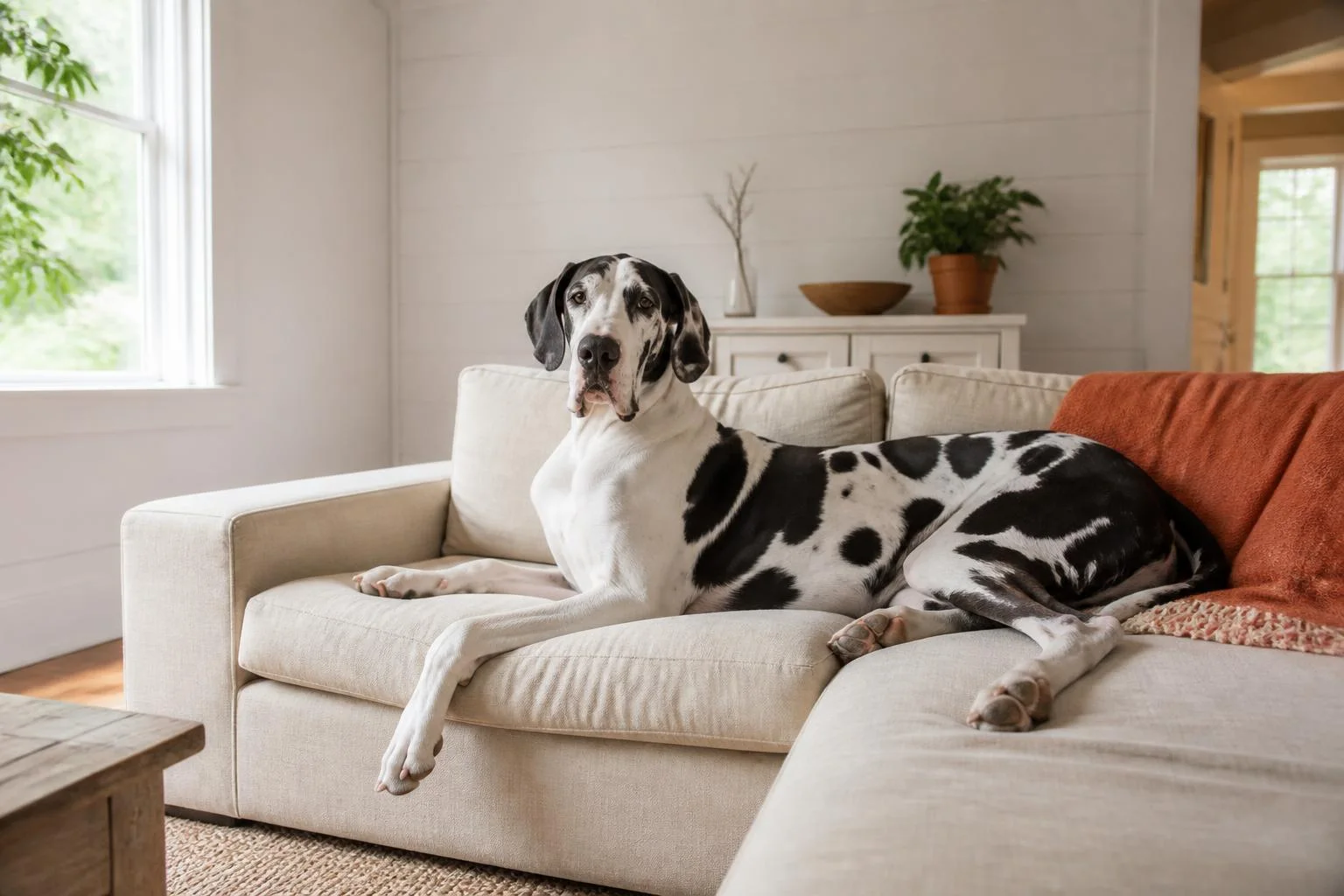
The best dog bed for a big dog is not automatically the one labeled XL, XXL, orthopedic, or giant. Start with the dog’s real sleeping footprint, then compare the bed’s usable sleeping area, outside footprint, construction limits, cleaning instructions, and return terms.
That sounds less exciting than a “top 10” list. It is also more useful when the dog is roughly the size of a loveseat and the box on your porch is roughly the size of a loveseat’s cousin.
Big Paws Club is not naming a winning bed in this guide because we do not currently have a published Big Paws Tested bed to recommend. This is a buyer-intent comparison guide: the goal is to help you eliminate bad fits before you spend money, without pretending an untested product is our pick.
1. Measure the dog before you compare the size name
Start with the dog in front of you, not the breed average and not the word “XL.”
Record:
- the dog’s occupied length in a normal stretched-out resting position;
- the dog’s occupied width when sprawled or curled the way they actually sleep;
- the date and units;
- whether the dog usually sprawls flat, curls tightly, leans against an edge, or changes positions throughout the night.
Then use the exact bed maker’s sizing method.
That last sentence matters because manufacturers do not all size beds the same way. Big Barker’s current size guide tells shoppers to measure from nose to base of tail. Kuranda’s size guide also starts with nose-to-base-of-tail length, then applies its own allowance for that framed-bed design. Orvis lists weight ranges for one of its current lounger beds.
Those are three different examples of why “my dog usually wears XL” is not a bed measurement.
If you want a reusable record before you shop, start with our measure-your-dog guide.
2. Separate usable sleeping area from the outside footprint
A bed has to fit two things at once:
1. the dog; 2. your room.
Those are not always the same measurement.
A simple flat mat may use almost its whole footprint as sleeping surface. A framed or bolstered bed may not. Kuranda, for example, explicitly distinguishes assembled outside dimensions from the inner area on its framed beds. That is exactly the kind of distinction a big-dog shopper should look for.
Before buying, write down two sets of numbers when the manufacturer provides them:
- outside footprint: the total floor space the bed occupies;
- usable sleeping area: the part the dog can actually lie on comfortably.
If a product page gives only an outside dimension and the design has thick bolsters, a frame, or raised sides, do not quietly assume the whole rectangle belongs to the dog.
Then compare the outside footprint with the room where the bed will live. Our big-dog home setup guide uses the same idea: tape out the real footprint before the furniture-sized dog product arrives.
3. Match the bed shape to the dog’s actual sleeping style
The “best” shape depends on what the dog does with the space.
A sprawler
A dog that sleeps on its side with legs extended needs usable length and width more than decorative sidewalls.
A curler or leaner
A dog that consistently curls or presses against an edge may make real use of a bolster or supported edge.
A dog that changes positions
If the dog alternates between curling, sprawling, and hanging half a body part off the edge like that was always the plan, prioritize enough unobstructed sleeping area for the largest position you regularly see.
The useful question is not “Which bed shape looks coziest?” It is “Does this shape leave enough usable area for how this dog sleeps?”
4. For framed or elevated beds, check the actual capacity and interior dimensions
If the bed has a frame, legs, suspended fabric, or another load-bearing structure, check the manufacturer’s stated capacity or compatibility information for the exact model and size.
Do not infer capacity from the word “Large.”
Current product pages make the point. Ruffwear’s Mt. EverRest cot, for example, publishes both its physical dimensions and a maximum weight capacity. Kuranda publishes model-specific bed dimensions and sizing guidance. Those are specifications to compare, not endorsements from Big Paws Club.
For a very large dog, the shopping note should include:
- outside footprint;
- usable or inner sleeping dimensions when applicable;
- stated maximum capacity, if the design has one;
- assembly requirements;
- any model-specific sizing instructions.
If the page does not provide a specification you need, mark it unknown rather than filling the blank with optimism.
5. Read the cleaning instructions like someone who has met a wet dog
“Washable” can mean very different things.
It might mean:
- the whole bed goes in a machine;
- only the removable cover is machine washable;
- the interior is spot-clean only;
- the cover can be washed but must air dry;
- a framed surface is wiped or hosed down instead of laundered.
For example, Ruffwear’s Basecamp bed page publishes separate care instructions for the product. Big Barker’s current bed and cover pages likewise spell out cover-care instructions rather than leaving “washable” as a vague promise.
For a big dog, cleaning logistics deserve more attention because the bed itself can be enormous. Ask:
- Does the cover come off without wrestling the entire bed?
- Is the cover the only washable piece?
- What does the maker say about drying?
- Is there a second cover available for the exact model?
- Can the bed realistically fit in the washer you actually have?
A washable cover is less helpful if removing it feels like rebuilding a sectional sofa.
6. Check how the bed will live in the room
A bed can fit the dog perfectly and still be terrible in the only place you have to put it.
Before ordering, check:
- whether it blocks a doorway, cabinet, vent, or normal walking path;
- whether the dog can get on and off without the bed being wedged against furniture;
- whether the floor surface is slick and the product publishes a non-slip feature or recommendation;
- whether the bed height, frame, or bolster changes how much room people need to walk around it;
- whether the bed is intended to move between home, crate, vehicle, or travel use.
This is where the outside footprint matters more than the marketing photo.
For a quick reality check, tape the proposed outside dimensions onto the floor and live with the rectangle for an evening. If everyone keeps stepping through it, the bed will not become more convenient once it is three-dimensional.
7. Read the return rules before you unwrap, personalize, or expand anything
Big beds can have big return complications.
Check the seller’s current policy before you unwrap compressed foam, remove packaging, personalize a cover, or discard the box.
Big Barker’s current FAQ, for example, says some foam products cannot be returned or exchanged once unwrapped and recommends using the cover to check fit before unrolling. That is a brand-specific policy, not a universal rule—but it is a good reminder to read the exact terms before opening a large, difficult-to-repack product.
Your shopping note should include:
- return window;
- whether opened or expanded foam is returnable;
- whether personalized items are final sale;
- who pays return shipping;
- whether the cover can be used to confirm footprint before the insert is opened.
A return policy is part of the product decision when the item is large enough to require its own zip code in the hallway.
A quick comparison table for big-dog beds
| What to compare | Why it matters | What to record | |---|---|---| | Dog’s occupied sleep size | Size names are not measurements | Length, width, position, date | | Usable sleeping area | Frames and bolsters can reduce the space the dog gets | Inner/sleeping dimensions | | Outside footprint | The room has to fit the bed too | Total length × width | | Capacity or structural limit | Relevant for framed/elevated designs | Exact model/size rating if published | | Cover and care | Big beds can be difficult to clean | What removes, what washes, how it dries | | Floor/room fit | A good dog fit can still be a bad household fit | Doorways, walking paths, furniture conflicts | | Return conditions | Some large beds are difficult or impossible to return after opening | Window, packaging, personalization, shipping terms |
The five-minute shortlist
For each bed you are considering, make one note with these fields:
Dog:
- occupied length:
- occupied width:
- usual sleep position:
Bed:
- exact product and size:
- outside footprint:
- usable sleeping area:
- capacity/limit if relevant:
- cover removable?:
- care instructions:
- return restrictions:
Room:
- taped footprint fits without blocking normal paths? yes / no
Then cross out anything that fails a hard requirement.
Do not let a prettier product page talk you back into a bed that is too small for the dog, too large for the room, or impossible to return.
What about “orthopedic” beds?
Treat “orthopedic” as a product claim to investigate, not a magic word that ends the comparison.
This guide does not diagnose joint disease, prescribe a bed for a medical condition, or rate foam quality without test data. If a dog has a medical, mobility, pressure-sore, post-surgical, or pain-related need, that belongs in a conversation with the dog’s veterinarian rather than in a generic shopping article.
For ordinary shopping, compare the measurable things the seller actually publishes: dimensions, construction, care, warranty/return terms, and any testable specifications for the exact product.
Big Paws recommendations: where they stand today
We are deliberately not filling this page with untested “best bed” winners.
When Big Paws Club has a relevant bed published through our Tested system, a recommended-gear block can point to that actual evidence. Until then, use this framework to narrow the field and check the current Fit Finder for any published product data that applies.
No published Big Paws Tested bed means no invented winner. That is a feature, not a missing paragraph.
Sources and further reading
Sources checked September 20, 2026. Product specifications, sizing methods, care instructions, and return policies can change; check the current page for the exact bed and size before buying.
- Big Barker: Bed Size Guide — manufacturer sizing method based on the dog’s measured length.
- Big Barker: Frequently Asked Questions — current sizing and return/exchange guidance.
- Kuranda: Walnut Dog Bunk Bed Size Guide — manufacturer example separating outside dimensions from inner sleeping dimensions and using a product-specific sizing method.
- Ruffwear: Basecamp Dog Bed — manufacturer example with published dimensions and care instructions.
- Ruffwear: Mt. EverRest Dog Cot — manufacturer example with dimensions and a stated maximum weight capacity.
- Orvis: ToughChew ComfortFill-Eco Lounger Dog Bed — manufacturer example using product-specific dimensions and weight ranges.
Editorial note: This is a researched buyer’s guide, not a hands-on product test or veterinary recommendation. Brand pages are cited as examples of current sizing, specification, care, and return information; inclusion is not an endorsement.
Hero image: AI-generated lifestyle illustration, not a customer dog or product test.
Want the next practical big-dog buying guide? Join The Big Dog Brief from the signup on Big Paws Club.