Practical guide · 7 min read
Before you buy XL: measure your dog, not the label.
Learn how to measure your dog for a bed or wearable gear, compare usable space and size charts, and keep the right numbers in one shopping note.
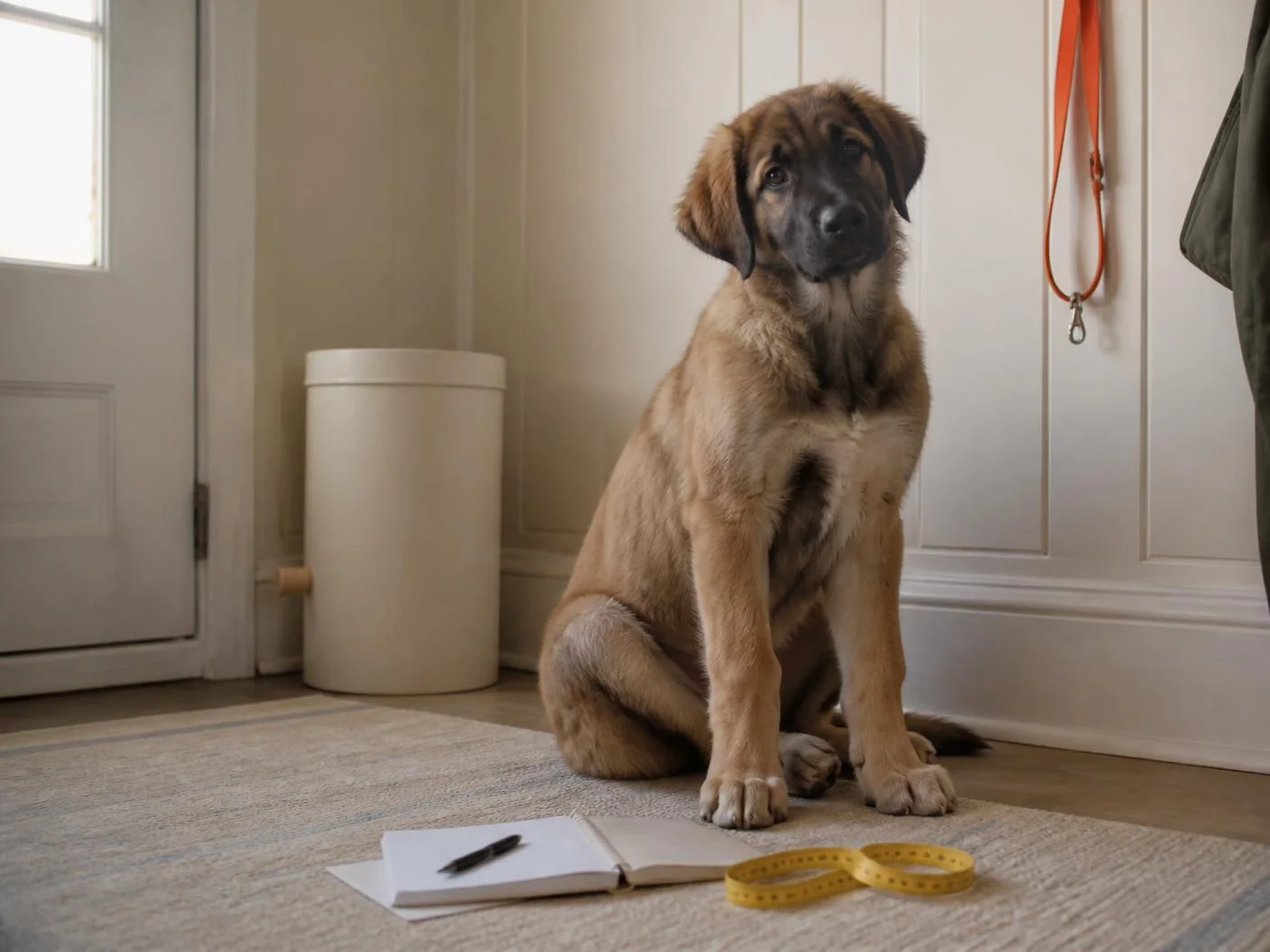
For a dog bed, measure the length and width your dog actually occupies while resting, then compare that footprint with the bed's usable sleeping area. For wearable gear, follow the exact product's measuring instructions and adjustment range. XL is a size name, not a measurement you can carry from one shopping cart to the next.
Your dog may consider half the couch a reasonable starter apartment. A product label is allowed less creative freedom.
Start with the thing you are buying
A harness, collar, bed, and crate do not ask the same question. Open the manufacturer's instructions for the exact model before taking a number, and record whether its chart uses inches or centimeters.
- Harnesses and other wearables: measure where that maker tells you. For example, Ruffwear's measuring guide uses chest girth around the widest part of the rib cage, just behind the front legs, for its harnesses, apparel, and packs. Other products may also require neck or back measurements.
- Beds: record the dog's sleeping footprint, the product's usable sleeping area, and its outside dimensions. Those are three different pieces of information.
- Crates: use the crate maker's sizing and setup instructions and check usable interior dimensions. A bed measurement is not a complete crate-sizing method, and physical fit alone does not establish suitability for car travel.
Use a flexible measuring tape for body measurements. Ruffwear also describes using string and then measuring that length with a ruler. Keep the tape or string supervised and put it away afterward.
Make a measurement record you can reuse
Copy this into a phone note. Keep the date and units with the numbers so a future shopping trip does not start with "I think he was an XL."
Quick checklist
- Dog and date: name; measurement date; inches or centimeters.
- Product: maker; exact model; size-chart link.
- Requested body measurements: chest, neck, back length, or height, as that product requires.
- For a bed: occupied sleeping length and width; curled or stretched-out position.
- Product dimensions: adjustment range or usable sleeping/interior space; separate outside dimensions.
- Buying conditions: seller; return deadline; condition rules; return costs; customization exclusions.
Record the measurement you took, not a number enlarged to allow for growth. Any allowance belongs in the next step, following the specific maker's instructions.
Measure the sleeping footprint, not just a standing dog
A standing measurement can be part of a manufacturer's method. A useful additional check for bed shopping is the space your dog uses when resting. BuddyRest's own FAQ recommends measuring that occupied space and notes that bolsters reduce the internal area.
Watch the position before measuring
Notice whether your dog curls up, stretches out, or switches between the two. Wait for a relaxed moment rather than arranging legs into a pose. Measure alongside the resting dog without pressing a tape against them; stop if they are bothered.
Record both length and width
Think of an imaginary rectangle around the resting dog. Record its longest occupied dimension and its widest occupied dimension, including the space taken by naturally extended paws or head. This is your practical sleeping-footprint check, not a replacement for any specific nose-to-tail-base measurement the maker requests.
For a dog who alternates positions, note both. Choosing from only the smallest curled-up footprint is a poor way to shop for the sprawling version of the same dog.
Check the inside and the outside separately
Ask for usable sleeping length and width, especially on a bolster or sofa-style bed. Then check the outside footprint against the place you intend to put it. Do not subtract a guessed bolster thickness from a product photo.
Our practical recommendation: sketch both rectangles in your note. One must accommodate the dog; the other must fit the room. A bigger label does not answer either question.
Compare the range, not just the size word
Two official size guides show why the model matters. These are examples of manufacturers' published instructions, not products we have tested or ranked.
- Kuranda standard beds: Kuranda's chart tells shoppers to measure nose to tail base and add 4 inches when choosing bed length. Its chart pairs a maximum 40-inch dog length with a listed 44-by-27-inch bed. That allowance belongs to Kuranda's method; it is not a universal rule for every bed.
- Barker Beds Original, Sleek Edition: the product page and size guide list Large as 48 by 30 by 7 inches, in length, width, and height. Its Large sizing illustration describes dogs up to 40 inches from nose to tail base. Check the selected style as well as the size; the range also includes Headrest and Sofa versions.
The same nominal dog length leads to different listed bed dimensions. Neither chart removes the need to check sleeping width, construction, and the exact version you are ordering. Orvis likewise cautions that a size in one of its bed styles does not necessarily correspond to the same size in another.
For adjustable wearable gear, put your actual measurement beside the stated adjustment range. At a boundary, follow that product's between-sizes instructions rather than automatically adding inches or choosing a larger label. A measurement narrows the choice; adjustment and an actual fit check still matter.
A worked example: the outside size can fool you
Hypothetical example, not a real dog or product test: a dog occupies a 42-by-26-inch rectangle while resting. A bed is advertised as 48 by 36 inches overall, but its listed inner sleeping area is only 38 by 26 inches.
The headline dimensions look roomy. The usable length is actually 4 inches shorter than the dog's recorded footprint. The outside size alone therefore fails this practical comparison.
Do not solve that by guessing what XXL means. Find the next model's actual sleeping-area measurements, check the maker's guidance, and compare again. Where a product does not publish the interior dimensions, ask the seller before ordering.
Read the return terms before the dog meets the packaging
Fit mistakes are inconvenient enough without discovering afterward that your escape route was final sale. Before paying, check:
- Which seller's policy applies: the manufacturer's store or a third-party retailer.
- When the clock starts: order date, delivery date, or another stated event.
- What condition is required: rules for unpacking, use, washing, or original packaging.
- What returning involves: authorization, shipping costs, fees, or another specified process.
- Which choices change eligibility: embroidery, customization, clearance, or other exclusions.
For a concrete example, Barker Beds' current refund policy describes a conditional donation-based mattress trial rather than ordinary physical returns. It also excludes customized items and directs third-party purchases to the retailer's policy. Read the complete terms for the exact order rather than treating a trial headline as the whole policy.
Save the applicable policy link or screenshot with your measurements. Confirm anything unclear with the seller before purchase, especially before choosing a personalized version.
Remeasure the dog who is still growing
Keep old measurements instead of overwriting them. Date the next set so you can compare them with the current gear's range.
Ruffwear advises sizing puppies from their current measurements. For adjustable gear, future room is useful only when the product also fits correctly now under its maker's instructions. Do not treat a loose fit as a growth plan.
Your next useful move
Open one note, measure for the item you actually need, and compare the relevant dimensions before choosing a size word. That is the whole system. No special app, breed-based guess, or new purchase required to start.
Browse the Big Paws Club blog for more practical big-dog reading.
Sources and further reading
Manufacturer guidance and specifications checked September 15, 2026. Product pages and policies can change; use the current instructions for the exact product and seller.
- Ruffwear: The Size Is Right — measuring wearable gear and sizing growing dogs.
- BuddyRest: Frequently Asked Questions — occupied sleeping space and bolster-bed interiors.
- Kuranda: Dog Beds Size Chart — manufacturer-specific measuring method and dimensions.
- Barker Beds: Original Orthopedic Dog Bed — selected style, listed dimensions, and sizing guide; cited for sizing, not medical claims.
- Orvis: Dog Product Sizing Guide — differences between bed styles and size labels.
- Barker Beds: Refund Policy — eligibility and exclusions, not a promise that every order qualifies.
Editorial note: This is a researched measuring and shopping guide, not a hands-on product test. Manufacturer links above are ordinary source links, not affiliate tracking links. The sleeping-footprint method and worked example are practical editorial guidance, not a guarantee of fit.
Image: AI-generated lifestyle illustration, not a real customer dog or product test.